Life Inside a Medieval Castle — Power, Luxury and Survival

When you picture a medieval castle, what comes to mind — grand towers, noble knights, glittering banquets? That's the fairytale.
For most people who lived within these walls, daily life was a different story altogether.
The Castle
A castle was more than a fortress. It was a home, a workplace, and a symbol of power.
Inside its walls, people lived, prayed, worked, and served — bound by an unforgiving social order.
The luxury of the few rested on the labor of the many.
But here's the twist: for many of those laborers, life inside the castle walls was a step up, offering food, shelter, and protection unmatched in the world outside.
To see how this world acted, we begin with those at the top — the noble family at the heart of power.
The Nobles
The most important figure in any castle was its owner — a king, lord, knight, or lady. Yet even they rarely lived here year-round.
The lord ruled his lands, settled disputes, and defended the realm; his lady managed supplies, servants, and, in his absence, the entire estate. In times of war, she could even lead the defense.
Their quarters reflected the highest rank: beds with curtains, private fireplaces, and personal toilets.
The rooms were in the safest part of the castle, and only trusted servants or honored guests were allowed in.
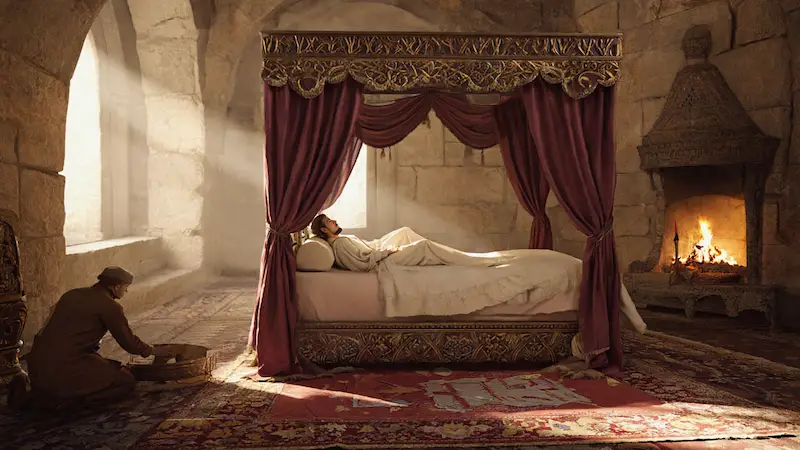
AI-generated illustration showing a noble's bedroom
Yet just beneath this comfort, a vastly different world emerged — one driven by labor, duty, and quiet endurance.
The Working Class
The vast majority of a castle's population were servants, laborers, and soldiers, each with their place in a strict internal hierarchy.
In peacetime, a small castle might have a garrison of only a dozen soldiers or even fewer.
The constable was in charge of the soldiers and led the castle's defence when the owners were away.
Castles were full of servants —especially when the lord was at home. It could be anywhere from 30 to 150 in a single castle.
The highest-ranked servants were the steward, who was a trusted administrator of the lord's estate, the butler, in charge of drink, and the head groom, who managed the stables.
Cooks were among the busiest servants, as a medieval household had to feed large numbers of people.
Going all the way down the ranks, we find the hot and greasy boy who turned the spit for roasting meat over the fire, or the gong-farmer, who had to clean the poo.
Servants' rooms were generally above the kitchen. Though they were small and lacked privacy, they were probably quite warm.
Lowlier servants slept anywhere within the castle they could find, sometimes even in tents outside the castle walls.
Household servants were paid very little but were given uniforms in their lord's colors and regular meals year-round.
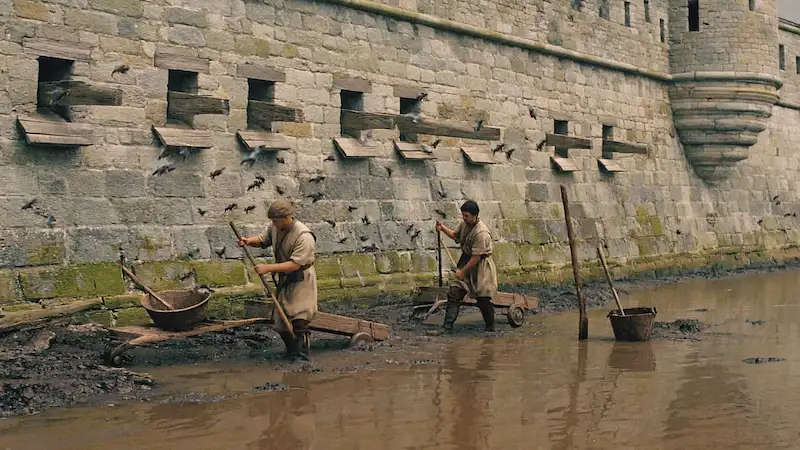
AI-generated illustration depicting the gong-farmers at work
To truly understand the differences between these worlds, we must follow both the nobles and the working class through a typical day within these walls.
Reality of Daily Life Nobility vs Working Class
For the workers, the workday began at the crack of dawn. Since electricity didn't exist, the servants had to make the most of every second of sunlight to complete their tasks.
By contrast, the lord and his family could stay in bed as long as they wished.
Up in their private chambers, they awoke to the help of servants — a basin of warm water, fresh clothes, and breakfast bread flavored with honey or spice.
It was a new day for everybody, but what followed depended entirely on one's place in the hierarchy.
And nowhere was this divide more visible than at the table itself.
Feasting vs. Surviving
Mealtime revealed the castle's deepest contrasts.
For the noble family, eating in public was part of everyday life.
Meals could last for hours and feature an incredible variety of dishes loaded with expensive, imported spices.
While the nobility drank fine wine and ale, the diet for the dozens of servants was a world away: dark bread and sometimes a thick vegetable stew.
Meat was a rare treat, but the leftovers from the lord's table were a huge perk of the job, and often better than anything a peasant outside the walls could hope for.
Feasts were so usual that you could almost say they were the norm, rather than the exception.
Records from Farleigh Hungerford Castle describe feasts that consumed hundreds of animals in a single day — a scale unimaginable to those laboring in the smoky kitchens below.
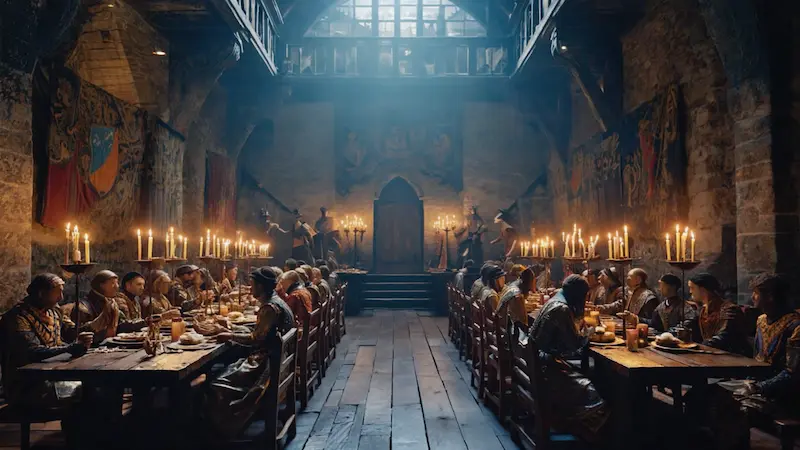
AI-generated illustration representing a feast at a medieval castle
But eating was only part of survival. Life inside a castle brought other daily challenges — going to the toilet and staying clean and healthy in a world of stone, smoke, and disease.
Toilets
The toilets of a castle were usually built into the walls, and, as space was at a premium, they were never any bigger than absolutely necessary.
Of course, there was no flushing in medieval times. Instead, you sat on a stone or wooden board with a hole in it, and the poo dropped through.
Because loos were made to overhang an outside wall, the poo fell either into the moat (if there was one), or into a pit outside the wall.
The unfortunate gong-farmers would shovel the poo into baskets and wheelbarrows, and take it off to bury, or spread on fields as fertilizer. Not one of the most envied jobs.
The Lords usually had their own private loos, but for the others, there were multi-seater public toilets.
So, when you had to rush to the bathroom for necessities, you would do so in full view of anyone present; the good news was that you could chat as you used them.
Privacy was definitely not valued as much as it is today!
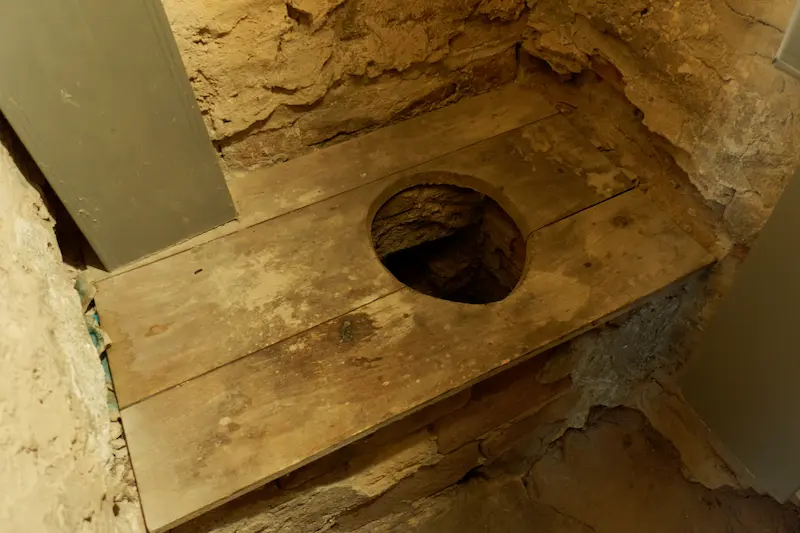
Primitive toilet inside a medieval castle, Piedmont, Italy
Personal hygiene
Despite the familiar thought, medieval people did like to wash. How they cleaned themselves largely depended on their status and possibilities.
The lord or lady of the castle had their own bathtub in which they'd bathe regularly with the finest oils and the most expensive soap.
For the poor, hot water was a luxury; a simple wipe-down with a wet rag or a quick refresh in a nearby water source would have to do.
In a smoky, crowded fortress, infection spread easily. Illness was the great equalizer.
Illness
While nobles and servants faced the same diseases, they had different access to treatments.
Nobles had personal physicians and could afford rare and exotic herbs, while servants relied on folk remedies and common herbs and lived in subpar conditions.
Yet no matter one's position, danger was never far away — a reminder that life inside these walls was fragile for everyone.
The Constant Shadow of Danger
Even though it was a world between the nobility and the working class, danger was a constant companion for both rich and poor.
Many castles were dark, wet, and cold, and the risk of vermin and illness was present.
Bad smell, smoke, and disease haunted daily life. There was always the risk of fire, as kitchens burned day and night, and there were countless candles and fireplaces.
And always, there was the threat of attack. During a siege, a castle became a death trap for both poor and rich.
So, from sudden attacks to collapsing roofs or deadly plagues, the shadow of death was a constant and brutal reality of life inside a medieval castle.
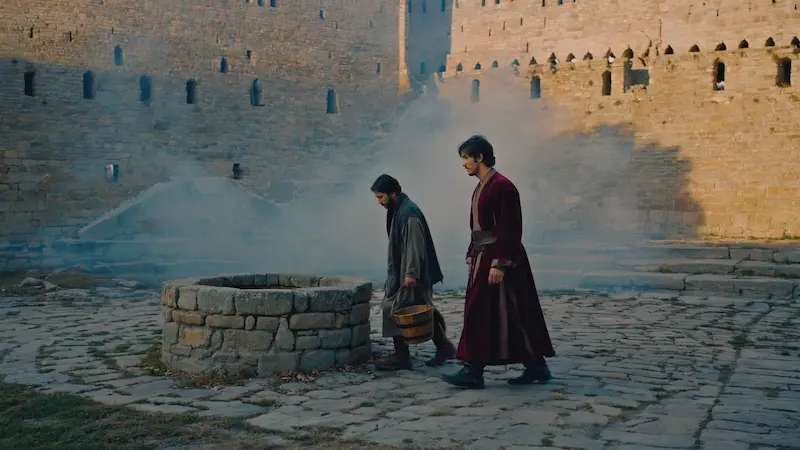
AI-generated illustration representing the constant shadow of death inside a medieval castle
From the outside, a castle is a symbol of romance and strength. But inside, it was a world of contrasts: rich feasts beside meager rations, authority beside exhaustion, luxury beside fear.
For the lord, it was his fortress of power.
But for many, it was a gruelling workplace, yet safer than the world beyond the walls.
Next story:
Latest Castle Stories
Did the Holy Grail Escape the Fortress of Montségur?
Four men escaped Montségur in 1244 carrying a secret treasure. Was it the Holy Grail — or something even more powerful?
How Chenonceau Became a Bridge to Freedom in WWII
When France was divided in 1940, Chenonceau stood right on the border — and its gallery became a hidden path to freedom.
Corvin Castle: The Truth Behind Its Terrifying Stories
Dark legends haunt Corvin Castle — hungry bears, a cursed well, an immured monk, and Vlad the Impaler. But how much of this is true?
Irish Castles: Dark Secrets Hidden for Centuries
Terrifying spaces, underground defenses, and forgotten rooms uncovered inside Ireland’s castles.