Medieval Dungeons: Myth vs Reality

When you think of a medieval dungeon, what comes to mind?
A dark, winding staircase spirals down into the depths of a medieval castle...water dripping from the stone walls, rats scurrying...chains hanging everywhere...and prisoners screaming in the shadows.
It's the classic picture of a castle dungeon.
But how much of this is true — and how much is shaped by legend and fiction?
Let's travel back in time to separate fact from fiction — and uncover what medieval dungeons were really like.
But first, we need to go back to the beginning... when dungeons weren't underground at all.
The Real "Dungeon" Was Inside a Tower
The word "dungeon" comes from the Old French "donjon". And originally, it had nothing to do with either prisons or underground spaces.
In fact, it was the exact opposite.
The donjon was the castle's main tower — the keep. It was the strongest part of the fortress — the place of last defence and the lord's residence.
So how did this symbol of power come to be associated with imprisonment?
Well, because the donjon was the most secure spot, it was also the logical place to keep very important prisoners.
Over time, the term slowly drifted from meaning the entire tower to the secure rooms inside it used to hold prisoners. At the same time, the word itself shifted. "Donjon" became "dungeon".
And power slowly came to be associated with confinement.
But even then, one thing remained true. Castles were not built to be prisons.
Which raises an important question. If castles weren't designed for imprisonment... where were prisoners actually kept?

The keep of an old castle in Doolin, Ireland
Where Were Prisoners Actually Kept?
In the early medieval period, long-term imprisonment was rare. Castles existed to project authority and defend territory, not to house criminals.
At the time, justice was swift and public. Fines, exile, mutilation, or execution were far more common than detention.
Getting imprisoned was typically a temporary matter, used to hold someone before their fate was decided, or to detain a political rival or a captured enemy noble for ransom. Prisoners were simply placed in whatever secure space was available.
Imprisonment was not a system. It was a tool — used only when it served power.
Purpose-built prison cells became more common only after the 12th century.
Still, the idea of a vast, maze-like complex of cells under every single castle is far from reality.
And when prisoners were held... their experience depended on one thing above all else.
Status.
Chains, Darkness, and Status
One of the most persistent myths about medieval dungeons is that all prisoners suffered equally. That everyone was chained, starved, and left in darkness.
In fact, the reality of medieval imprisonment was a tale of two very different experiences, and it all depended on one thing: your social status.
The familiar story of the disgusting conditions — cold, damp, and filthy —only applied to ordinary criminals or low-ranking prisoners, if they were even kept in a castle at all.
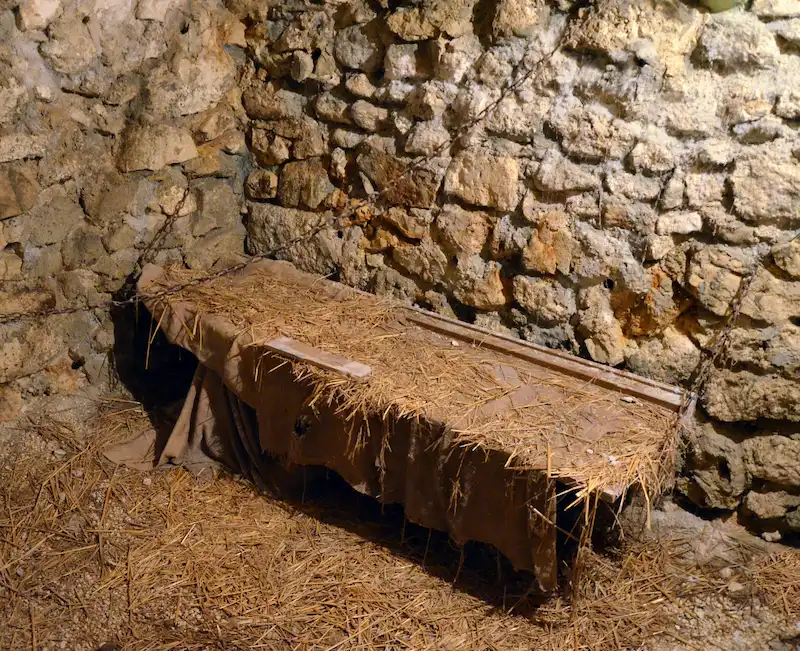
Medieval prison cell, Monte Sant’Angelo Castle, Italy
But for high-status captives — a captured knight, a baron, or even royalty— the experience was completely different. These people were valuable assets, held for political leverage or a handsome ransom.
Therefore, they were often treated more like high-status captives than criminals — albeit not allowed to leave. They were housed in comfortable apartments within the castle, sometimes with their own servants, nice clothes, and decent food.
The Tower of London, for example, famously housed political prisoners like King James I of Scotland and Charles, Duke of Orléans, in relative comfort, not in underground cells.
The goal was to isolate them — not destroy them.
But even then, castles were not the usual place for everyday criminals. Most common offenders were held elsewhere — or punished quickly.
Which makes one particular image stand out even more.
The image of the oubliette.
The Myth of the Oubliette
Maybe no part of the dungeon myth is more terrifying than the oubliette.
The name comes from the French oublier, which means to forget.
An oubliette was a small vertical shaft, accessible only from a trapdoor in the ceiling. Prisoners were dropped inside and simply... left to die.
And yes — oubliettes did exist. At places like Leap Castle, restoration work revealed a concealed pit filled with human remains. A real, horrifying space.
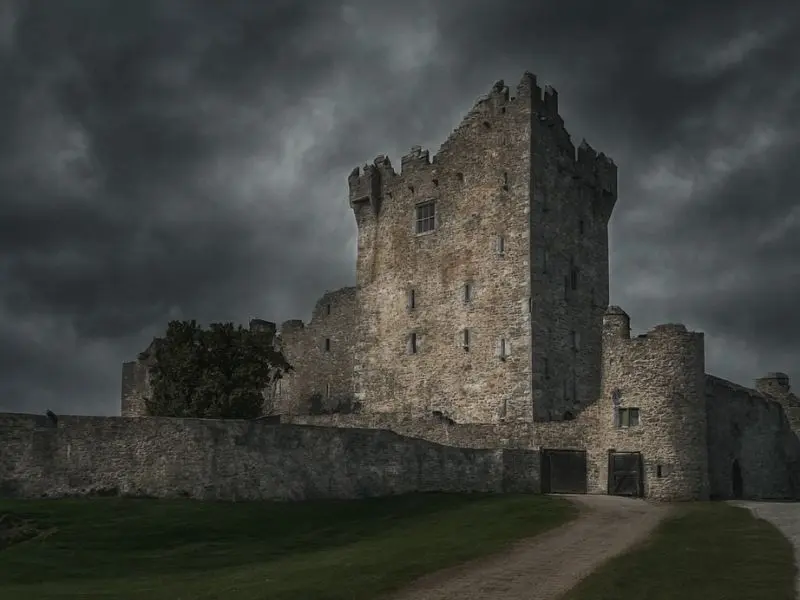
Leap Castle, Ireland
But these structures were exceptional, not typical, and the whole idea of the oubliette has been dramatically exaggerated.
Today, historians and archaeologists believe many so-called "oubliettes" were misidentified. In many cases, these spaces served very different purposes, such as cisterns for storing water, silos for grain, or latrine chutes.
But the legend of being thrown into a pit and left to die was often a more powerful psychological threat than the reality.
The same is true for another powerful myth.
The torture chamber.
The Fantasy of the Torture Chamber
Popular imagination tells us that medieval dungeons were filled with torture devices. And even had dedicated torture chambers. We picture them filled with racks, iron maidens, and branding irons, where screams were just part of the daily ambiance.
In fact, systematic torture was far less common than we assume.
Yes, judicial torture did exist in the late Middle Ages. But it was used to extract confessions — not as punishment.
Furthermore, it was regulated by legal procedures and reserved for the most serious crimes, such as treason or heresy. It was a tool of the state — not a routine practice carried out in every castle.
Many of the most famous torture devices are actually post-medieval inventions or reconstructions made centuries later, often incorrectly.
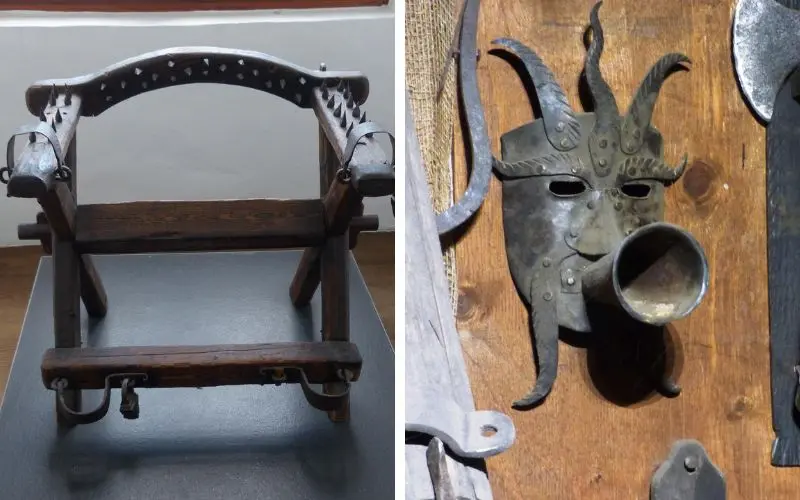
Museum display of historical punishment artifacts
Even when torture was authorized, the psychological pressure was so intense that prisoners often confessed merely at the sight of the instruments.
The truth is that the greatest suffering of a medieval imprisonment wasn't a theatrical torture device.
It came from something else entirely.
The Real Horror of Medieval Imprisonment
The true horror of a medieval prison was brutal, just in a different way than we imagine.
The biggest danger by far was filth and disease. Cells were often crowded, crawling with lice and rats, and had almost no sanitation.
In the cold, damp darkness, infections would rip through the population. Even more, prisoners were often given just enough food and water to survive.
In these conditions, it was much more likely to die from disease, hunger, or infections than from any torture device.
Then there was the psychological damage. The constant darkness, the cold that seeps into the bones, and the crushing isolation were all designed to break a person's spirit.
The slow, creeping misery of cold, hunger, and sickness was the real horror of the medieval dungeon.
And yet, this quiet reality is not what survived in memory.
Why the Myth Survived
So, medieval dungeons are far from what we imagine.
But how did this myth survive? And why?
It all started with the Romantic literature of the 18th and 19th centuries. Writers used the dungeon as a powerful symbol for horror and despair, creating the template we all know today: the dripping walls, the rattling chains, the skeletons in the corner.
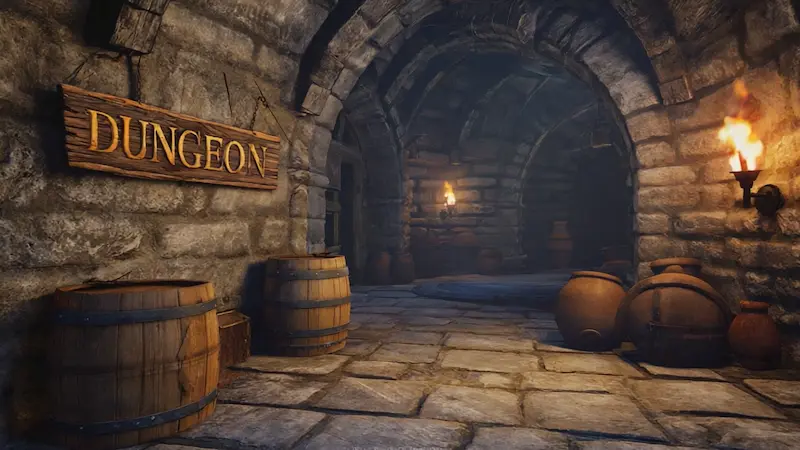
And later, tourism sealed the deal. As old castles were restored and opened to the public, tour guides and owners leaned into the public's love for the macabre.
They labeled random cellars "The Dungeon" and dark pits "The Oubliette." Sometimes, they even added chains and replica racks to complete the picture.
Tourists wanted dungeons, so the sites gave them dungeons, creating a feedback loop that has lasted to this day.
What Medieval Dungeons Really Were
The history of the medieval dungeon is a classic case of a myth becoming more real than reality.
The made-up image of massive, terrifying dungeons beneath every castle, filled with elaborate torture chambers, is a fantasy, woven from centuries.
But the reality is less about sensational cruelty and more about the use of power, status, and control. It was a world where high-status prisoners lived in relative comfort, and low-status ones were left to face darkness and despair.
It's a reminder that the past is often not what we imagine it to be. The most surprising truths are often found not in the dark pits of our imagination — but in the forgotten history behind the words we use every day.
Next story:
Latest Castle Stories
Did the Holy Grail Escape the Fortress of Montségur?
Four men escaped Montségur in 1244 carrying a secret treasure. Was it the Holy Grail — or something even more powerful?
How Chenonceau Became a Bridge to Freedom in WWII
When France was divided in 1940, Chenonceau stood right on the border — and its gallery became a hidden path to freedom.
Corvin Castle: The Truth Behind Its Terrifying Stories
Dark legends haunt Corvin Castle — hungry bears, a cursed well, an immured monk, and Vlad the Impaler. But how much of this is true?
Irish Castles: Dark Secrets Hidden for Centuries
Terrifying spaces, underground defenses, and forgotten rooms uncovered inside Ireland’s castles.