St Mawes Castle
★★★☆☆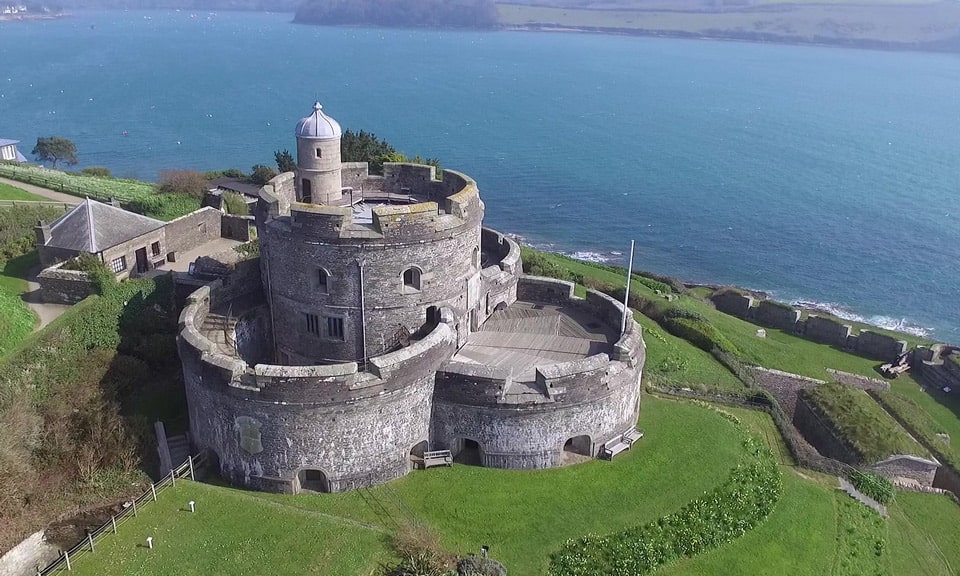
Attribution: Aerial photo ©Paul R. Davis
St Mawes Castle is an artillery fort constructed by Henry VIII near Falmouth, Cornwall, between 1540 and 1542. It formed part of the King's Device programme to protect against invasion from France and the Holy Roman Empire, and defended the Carrick Roads waterway at the mouth of the River Fal.
The castle continued in use as a fort through the 18th and 19th centuries. After 1905, however, St Mawes' guns were removed, and between 1920 and 1939 it was run by the state as a tourist attraction.
Brought back into service in the Second World War, naval artillery and an anti-aircraft gun were installed at the castle to defend against the risk of German attack. With the end of the war, St Mawes again returned to use as a tourist attraction. Historian Paul Pattison has described the site as "arguably the most perfect survivor of all Henry's forts".
The castle continued in use as a fort through the 18th and 19th centuries. After 1905, however, St Mawes' guns were removed, and between 1920 and 1939 it was run by the state as a tourist attraction.
Brought back into service in the Second World War, naval artillery and an anti-aircraft gun were installed at the castle to defend against the risk of German attack. With the end of the war, St Mawes again returned to use as a tourist attraction. Historian Paul Pattison has described the site as "arguably the most perfect survivor of all Henry's forts".
Leave a comment
Latest Castle Stories
Medieval Dungeons: Myth vs Reality
Separate myth from reality as we explore what medieval dungeons really were — how prisoners were held, punished, and remembered.
Why Heidelberg Castle Was Never Rebuilt — and Left a Ruin
How war, politics, and Romanticism turned a once-great palace into a preserved ruin.
Life Inside a Medieval Castle — Power, Luxury and Survival
A look at daily life inside medieval castles, from noble privilege to the harsh realities of survival.
Reviews and impressions
Tom
Very nice with an amazing view and in great form still.